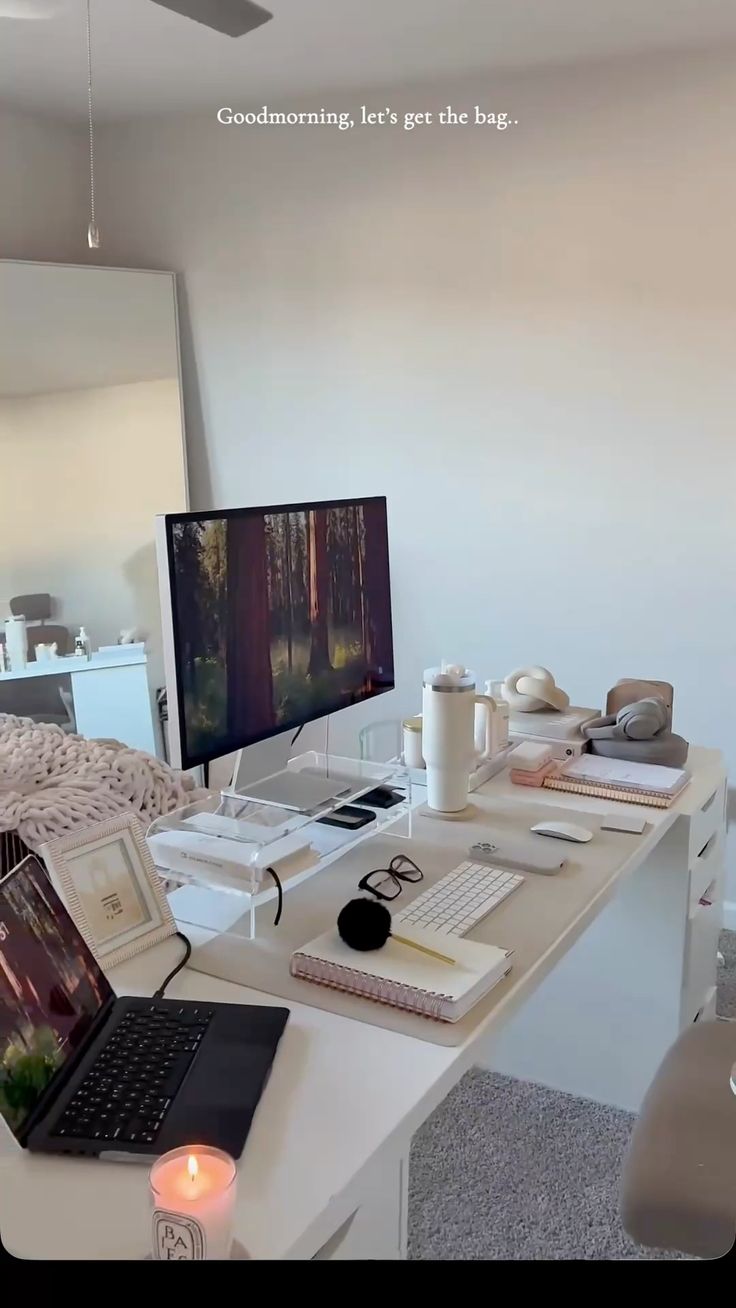
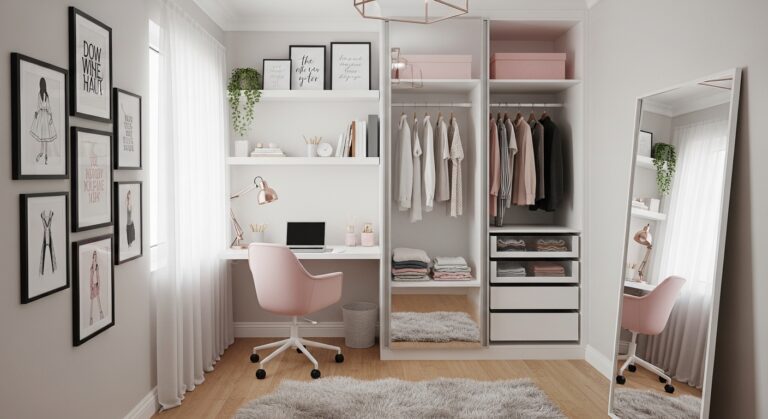
A small home office basement is a smart way to utilize unused space while creating a quiet and distraction-free work environment. With the right layout, lighting, and design choices, even a compact basement can become a comfortable and highly functional home office.
This guide covers planning tips, layout ideas, lighting solutions, and design strategies to help you build a productive basement home office, even in limited space.
Why Choose a Basement for a Small Home Office?
A small home office basement offers several advantages:
- Quiet environment with fewer distractions
- Separation from living areas
- Efficient use of underutilized space
- Flexible layout options
- Potential to increase home value
Basements are ideal for remote work, freelancing, and creative projects.
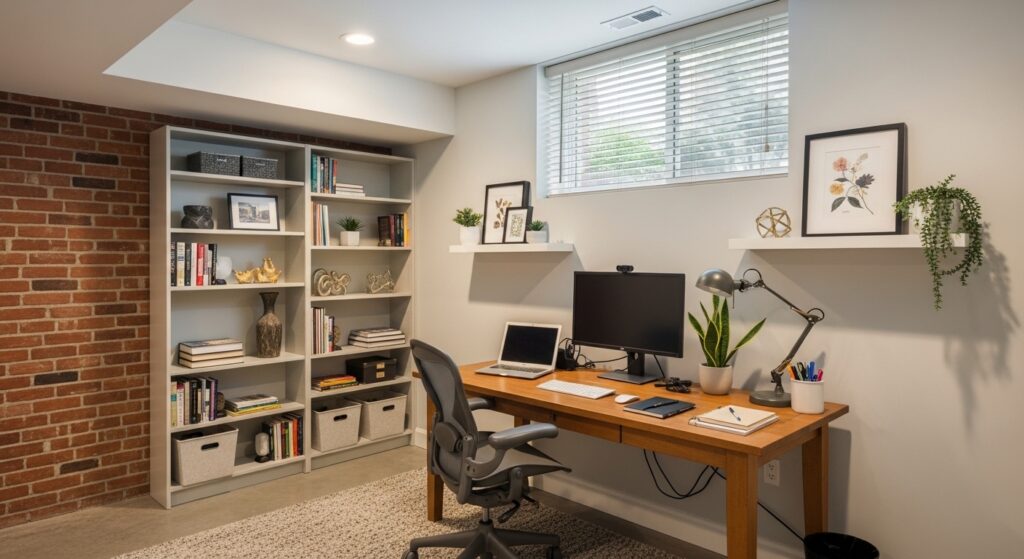
Planning a Small Home Office Basement
1. Assess Ceiling Height and Layout
Basements often have lower ceilings, so plan carefully:
- Choose low-profile furniture
- Avoid bulky storage units
- Maintain clear walking paths
Good planning prevents the space from feeling cramped.
2. Address Moisture and Insulation
Before setting up your office, ensure the basement is dry and comfortable:
- Use moisture barriers
- Add insulation
- Consider a dehumidifier
A dry environment protects both furniture and electronics.
Best Layout Ideas for a Basement Home Office
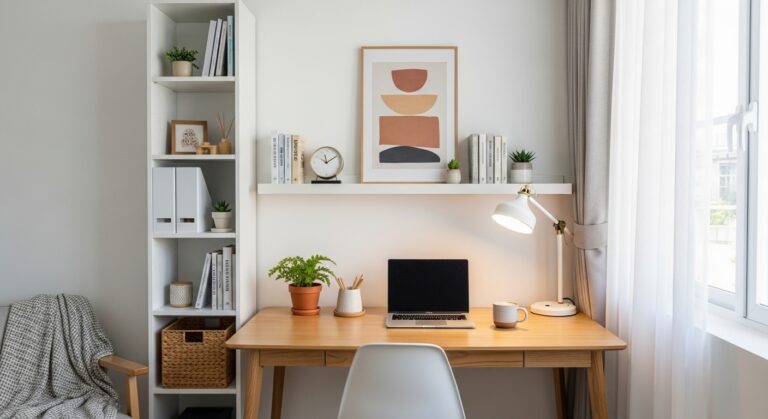
3. Wall-Based Desk Setup
Placing the desk against a wall maximizes floor space and keeps the layout clean and organized.
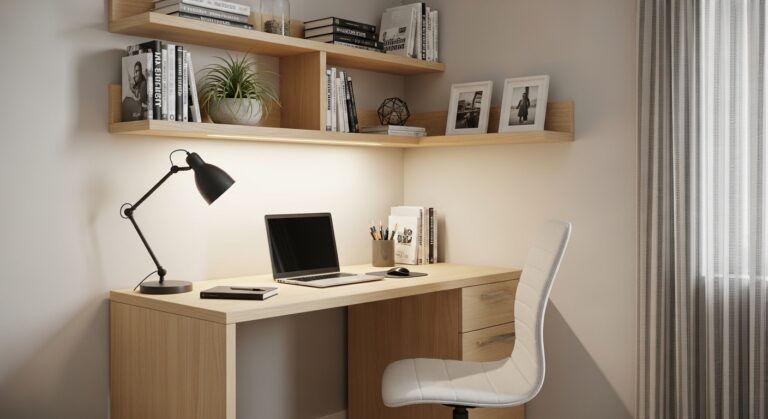
4. Corner Office Layout
A corner desk works perfectly in a small home office basement, making efficient use of limited square footage.
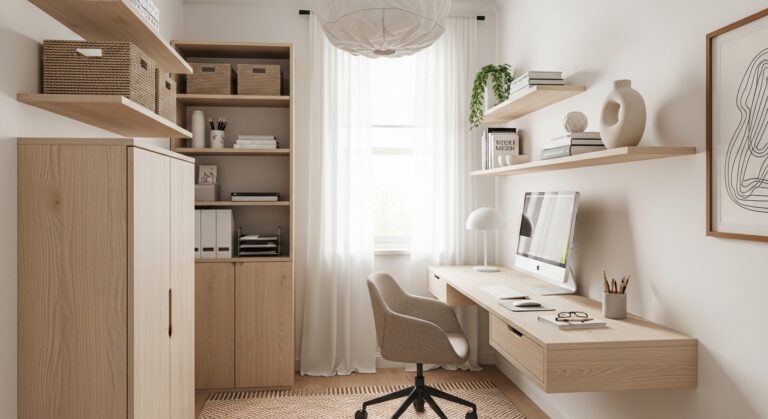
5. Built-In Desk and Storage
Built-ins create a custom look and maximize storage without crowding the room.
Lighting Solutions for Basement Home Offices
6. Layered Lighting Design
Basements lack natural light, so layered lighting is essential:
- Overhead LED lighting
- Task lighting at the desk
- Accent lighting for warmth
Balanced lighting improves focus and comfort.
7. Use Light Colors to Reflect Light
Light wall colors such as white, cream, and light gray help brighten a basement workspace.
Flooring Options for Basement Offices
8. Choose Durable and Comfortable Flooring
Best flooring options include:
- Vinyl plank flooring
- Carpet tiles
- Rubber-backed rugs
These materials are moisture-resistant and comfortable underfoot.
Storage and Organization Tips
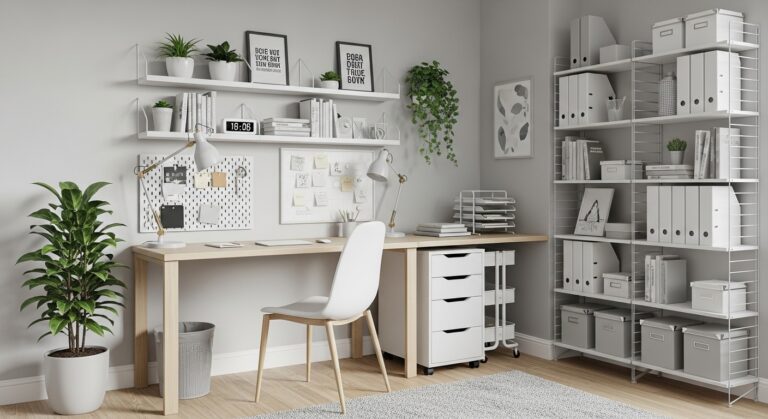
9. Vertical Storage Solutions
Use shelves and cabinets to store office supplies without using valuable floor space.
10. Hidden Storage for a Clean Look
Closed cabinets and drawers keep the small home office basement organized and clutter-free.
Design and Decor Ideas
11. Minimal and Functional Décor
Keep décor simple to avoid visual clutter. Add:
- Framed artwork
- Small indoor plants (real or artificial)
- Neutral accessories
12. Soundproofing for Better Focus
Basements are naturally quiet, but adding rugs, curtains, or acoustic panels further improves sound control.
Common Mistakes to Avoid
- Ignoring moisture issues
- Poor lighting placement
- Using dark color schemes
- Overcrowding furniture
- Blocking ventilation
Avoiding these mistakes ensures your small home office basement stays comfortable and productive.
Final Thoughts
A thoughtfully designed small home office basement can become a quiet, efficient, and comfortable workspace. With proper planning, effective lighting, moisture control, and smart storage, even a compact basement can support long hours of focused work.